

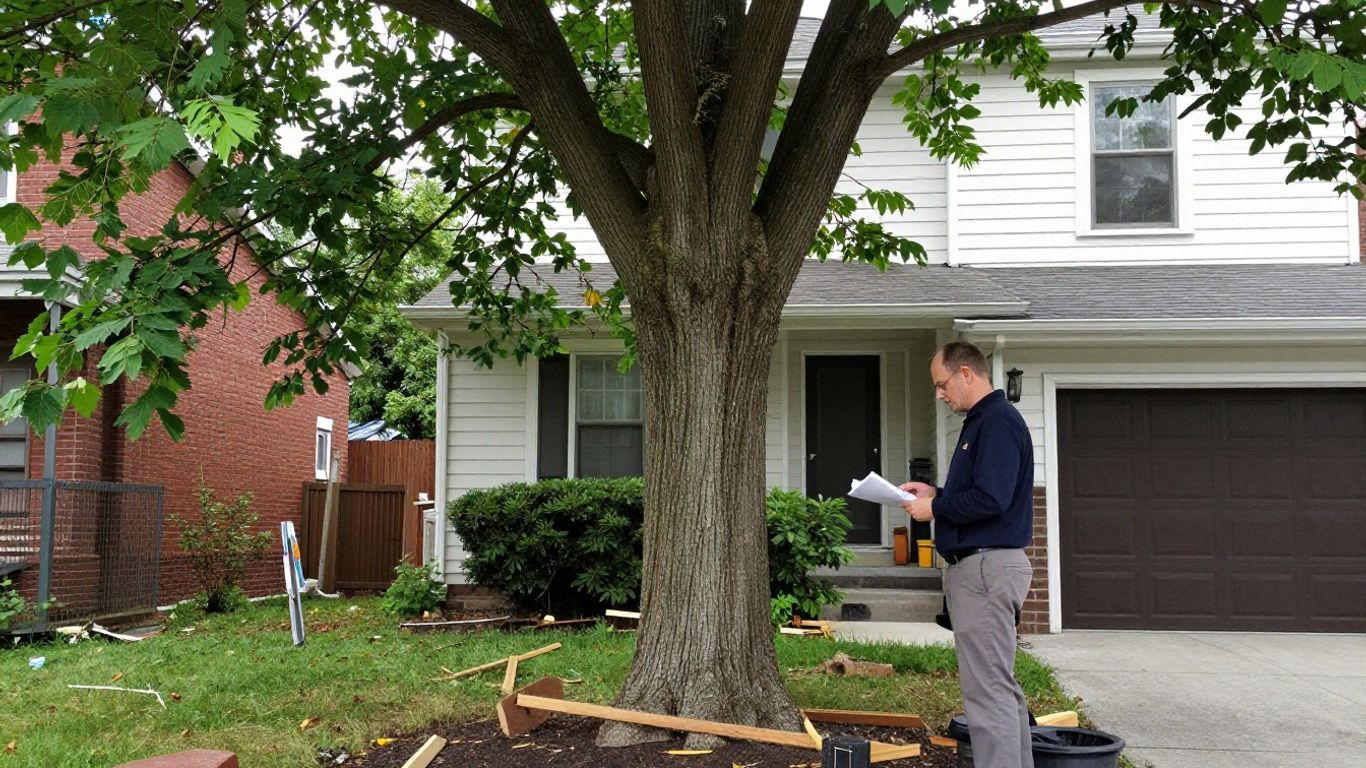
If you’ve already cut down a tree in Ottawa, or you’re weighing whether to skip the paperwork, the real question isn’t just whether a permit was required. It’s what happens next. A Tree Protection By-law violation in Ottawa can carry a fine anywhere from $500 to $100,000, and the penalty is often only the start: replacement planting, stop-work orders, and construction delays can follow. This guide breaks down the actual fine amounts, how violations get reported and investigated, and exactly what to do if a tree is already on the ground.
Key Takeaways
Ottawa’s tree rules can apply even when a tree stands on private property. Before cutting, check the trunk diameter, the property zone, and whether an exemption truly applies.
- A protected tree may require a City of Ottawa permit before removal.
- The tree removal fine Ottawa homeowners face can range from hundreds to as much as $100,000.
- Development-related removals may involve higher application fees and stricter documentation.
- Dead, hazardous, or storm-damaged trees are not automatically exempt in every situation.
- If a tree was already removed, prompt professional advice can help clarify the next step.
Is Your Tree Protected Under Ottawa’s Tree Protection By-law?
Ottawa’s Tree Protection By-law regulates the injury or removal of certain trees on private and city-owned land. Ownership alone does not necessarily give a homeowner the right to remove a mature tree without permission. The first practical question is whether the tree meets the applicable size threshold and whether the property falls within a protected area. If you haven’t removed anything yet and just want to know whether a permit applies to your situation, see our guide on whether you need permission to cut down your own tree. This article picks up from there: what happens if you skip that step.
Diameter Rules and Permit Exemptions
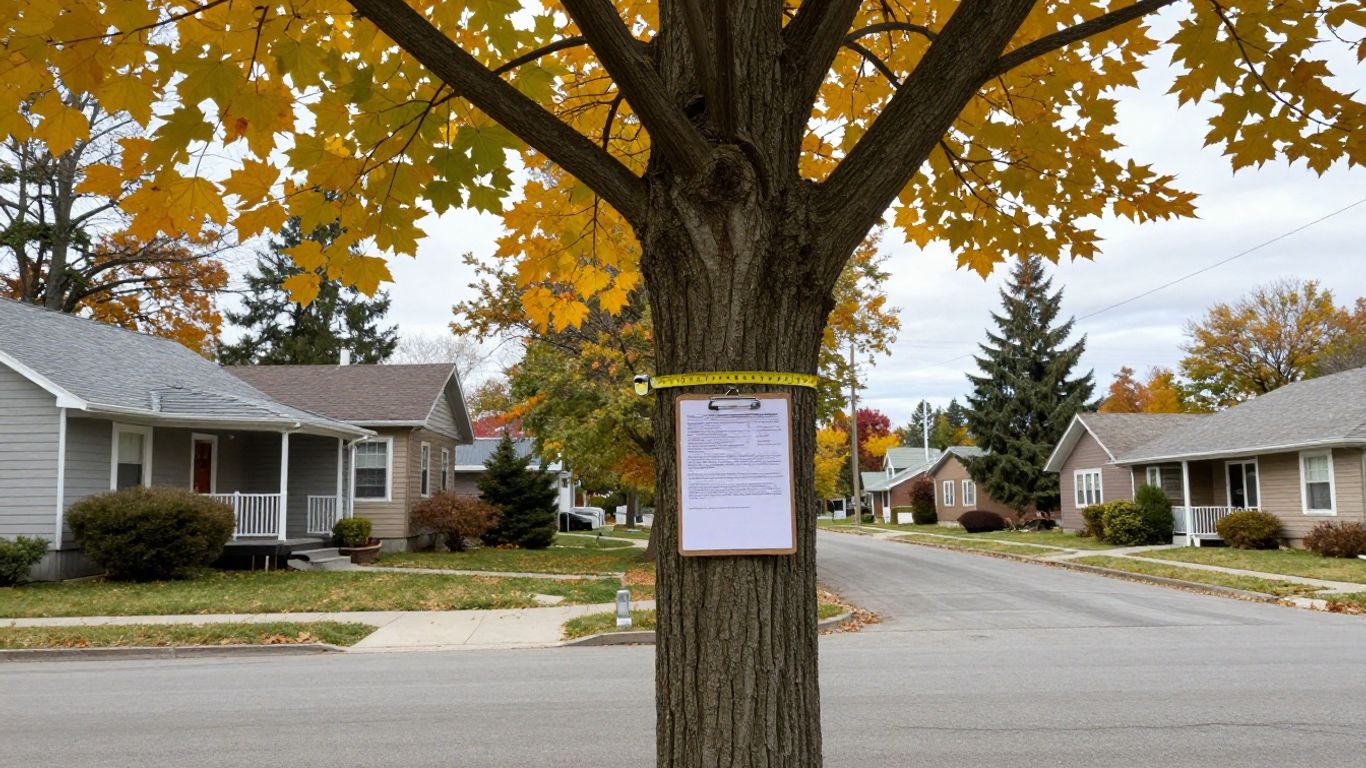
For many Ottawa properties, the key measurement is the trunk diameter at breast height. A tree measuring more than 30 cm, roughly 12 inches, commonly requires a permit, although the exact requirements depend on the property and by-law conditions. Measure rather than estimate; a tape measure around the trunk is more reliable than judging whether the tree looks large enough.
Some situations may qualify for an exemption, including certain trees that pose an immediate danger to people or property, trees in particular agricultural settings, and specific private ash-tree circumstances. A tree that appears dead is not automatically outside the by-law. If you are unsure, Ottawa’s tree permit requirements provide a useful starting point, but a certified arborvitae can assess the condition and documentation needed for your case.
How Much Is the Fine for Removing a Tree Without a Permit in Ottawa?
The phrase tree removal without permit ottawa fine covers more than one possible outcome. The amount depends on the by-law provision, the circumstances of the removal, and how the matter is handled by the City or the courts. A homeowner should not assume that a small residential project means a small penalty. The financial consequences can be far greater than the cost of checking the rules first.
Minimum vs. Maximum Fines ($500 to $100,000)
Reported by-law penalties can begin at approximately $500 and rise as high as $100,000 for serious violations. The maximum figure is not a standard charge for every homeowner; it signals the upper end of the enforcement range. Factors such as the tree’s status, the nature of the breach, and the circumstances surrounding the removal can affect the result.
| Situation | Possible concern | Practical takeaway |
|---|---|---|
| Smaller by-law violation | Lower-level monetary penalty | Confirm the permit requirement before work begins |
| Protected mature tree removed | Significant enforcement exposure | Keep measurements, reports, and approvals on file |
| Removal connected to construction | Additional development consequences | Coordinate tree approvals with the project schedule |
| Serious or repeated non-compliance | Higher fine or court involvement | Get legal and arboricultural advice promptly |
These ranges are a warning, not a prediction. The safest way to reduce uncertainty is to verify the tree’s status before hiring a crew or starting work, especially when a project involves a distinctive tree Ottawa residents may otherwise overlook.
Special Fines for Financial or Development Gain
A removal tied to financial or development gain may be treated more seriously than an isolated backyard decision. For example, cutting a protected tree to clear a building envelope, increase usable space, or advance an unapproved construction plan can create a broader compliance issue. The by-law’s maximum penalties are particularly relevant when the removal appears connected to a commercial or development benefit.
A fine may also be only one part of the problem. If work continued after the City raised concerns, the property owner could face additional orders, project delays, or requirements tied to replacement and restoration. That is why a permit question should be addressed before demolition, excavation, or construction begins.
Beyond the Fine: Other Costs of an Illegal Tree Removal
The direct penalty is often the easiest cost to picture, but illegal tree removal can affect the entire project. A replacement obligation may require new planting, site changes, or professional planning. A leftover stump can also complicate the site review, so it is worth understanding why leaving a stump in the ground causes problems before deciding how to handle it. Construction schedules can also be disrupted if the City investigates the removal or places conditions on further work. The cheapest time to resolve the issue is before the saws arrive.
Replacement Costs and Stop-Work Penalties
Ottawa may require replacement planting or other corrective measures when a protected tree has been removed contrary to the by-law. The cost depends on the size and type of replacement, the available planting area, and the work needed to restore the site. A replacement tree may also need ongoing watering and care, so the obligation can extend well beyond the initial purchase.
Stop-work directions can be especially disruptive when the removal was connected to a deck, addition, infill project, or new build. Delays may affect contractors, financing, inspections, and material deliveries. A written arborvitae assessment can help document what happened and identify practical options before the situation becomes more expensive.
How Illegal Tree Removals Get Reported and Investigated
A suspected illegal tree removal may come to the City’s attention through a neighbor, a nearby resident, a contractor, or an inspection connected with development. Someone may report illegal tree cutting Ottawa authorities should review, particularly when a large stump, fresh wood chips, or active construction is visible. A report does not automatically establish a violation, but it can prompt questions about the tree and the authorization for its removal.
The City may review the property, photographs, mapping information, permit records, and the timing of nearby work. Investigators can also consider whether the tree was on private land, city land, or a boundary line. When a tree crosses onto a neighbor’s property, consent and ownership questions may become part of the inquiry.
Homeowners should preserve photographs, arborvitae reports, contractor invoices, weather records, and communications about the tree’s condition. Do not alter the stump or discard relevant material before understanding what information may be needed. If you are reporting a possible tree bylaw violation Ottawa residents can contact the City through its by-law or urban forestry channels; if you are the owner, respond carefully and seek professional advice. Confirming your permit status early is far simpler than responding to a City notice later.
Common Situations That Lead to Ottawa Homeowners Getting Fined
Many Ottawa by-law disputes begin with an ordinary home project rather than an attempt to ignore the rules. A homeowner may rely on a contractor’s assumption, mismeasure the trunk, or believe the tree is exempt because it is unhealthy. The problem is that removal is often irreversible by the time anyone checks the paperwork.
Removing a Tree Before a Renovation, Deck, or New Build
Trees are sometimes cleared before plans are finalized because they appear to obstruct a foundation, driveway, deck, or addition. That order can create trouble if the tree needed a permit or if the project required a broader tree information report. The removal should be considered as part of the overall construction approval process, not as a separate landscaping decision.
Before work starts, confirm the diameter, property boundaries, zoning context, and permit requirements. A certified arborvitae may identify whether pruning, redesign, or removal is appropriate and can help prepare the information the City expects.
Assuming a Tree Was “Dead” or an “Emergency”
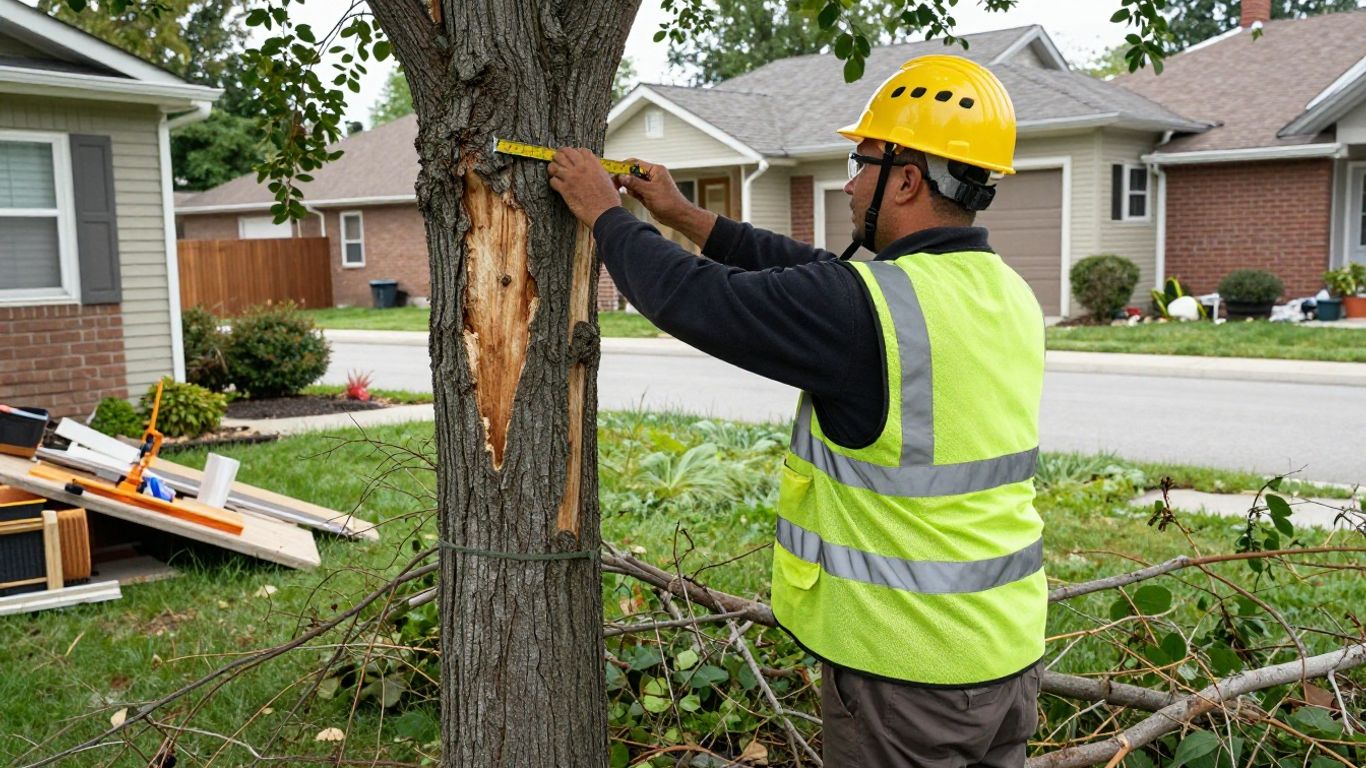
A visibly declining tree can still be protected. Likewise, a storm-damaged tree may present a genuine emergency, but the owner should document the hazard with photographs and obtain professional advice where it is safe to do so. Removing a tree simply because it is inconvenient, unattractive, or likely to fail is not the same as responding to an immediate danger.
When urgent conditions exist, keep records of the weather event, visible damage, and steps taken to protect people and structures. Do not place yourself near unstable limbs or power lines. The distinction between a permitted emergency response and an unverified assumption can matter greatly if the City later asks why the tree was removed.
Already Removed a Tree Without a Permit? What to Do Next
Do not ignore the situation or rush to replant, grind the stump, or continue related construction before you understand the requirements. Gather the address, approximate removal date, photographs, contractor information, measurements, and any evidence that the tree was dangerous or exempt. These details can help an arborvitae and the City distinguish a misunderstanding from deliberate non-compliance.
Contact a certified arborvitae for an assessment of the remaining site and the circumstances of removal. Green Thumb Tree Specialists offers free consultations and permit assistance, which can help you get a second opinion before the City contacts you, not after.
If the City contacts you, answer truthfully and keep copies of every notice and submission. Ask what corrective action, replacement planting, or documentation is required before making commitments. If there is a formal charge or a substantial potential penalty, consider obtaining legal advice as well as arboricultural advice.
How to Legally Remove a Protected Tree in Ottawa
A lawful removal begins with planning, not cutting. The owner should establish whether the tree is protected, identify the correct permit category, and allow time for arborvitae reporting and City review. Permit posting and neighbor-consent requirements may also affect the work schedule.
Step-by-Step Permit Process
Start by measuring the trunk and checking the property context. Then arrange the required arborvitae documentation, submit the application, and wait for written approval before removal. For development work, the tree permit should be coordinated with the broader project documents rather than treated as an afterthought.
A practical sequence usually looks like this:
- Measure the trunk and confirm whether the tree falls under the by-law.
- Have a certified arborvitae, not a general landscaper, prepare the required Tree Information Report or other documentation.
- Submit the permit application with site and tree details.
- Wait for City review and follow any inspection or notification requirements.
- Post the approved permit as required before and after removal, then use a qualified crew.
This sequence helps prevent a common mistake: scheduling the removal first and treating the permit as paperwork that can be fixed later. Keep the approval and related reports together with the project records.
2026 Permit Application Fees
As of February 1, 2026, the City of Ottawa’s tree permit application fee is $200 per tree for non-development removals, up to a maximum of five trees. For removals tied to infill development, the fee rises to $1,240 per tree, also capped at five trees. These are application fees, not the full cost of an arborvitae report, tree work, replacement planting, or construction delay.
These application fees are just one line item. Use our Price Calculator to get a realistic estimate of total cost, including arborvitae reporting and removal.
Fees and requirements can change, so verify the current amount before submitting. The City may also require a Tree Information Report, neighbor consent in boundary situations, and visible notice for the required period. Paying an application fee does not authorize removal by itself; written approval and compliance with the permit conditions are still necessary.
Avoid the Fine: Book a Certified Arborist Consultation Today
If you are worried about a possible City of Ottawa tree fine, begin with facts rather than guesses. A certified arborvitae can inspect the tree or remaining stump, discuss whether an exemption may apply, and identify the reports or permit steps that fit the situation. That is useful before removal, during a project, or after an unexpected mistake.
Green Thumb Tree Specialists provides tree removal permit guidance and certified arborvitae support, including help navigating Ottawa’s by-law process. The right assessment may also show that pruning or risk management is preferable to removal.
For a property-specific review, arrange a consultation before work continues. Bring photographs, plans, contractor details, and any City correspondence so the arborvitae can give practical, documented guidance. Early advice is usually simpler than reconstructing the facts after an illegal tree removal Ottawa investigation has begun.
Get your free consultation or call us, available 24/7 for urgent tree situations across Ottawa.
Conclusion
Ottawa’s tree rules are easiest to manage before removal begins. Measure carefully, verify whether the tree is protected, obtain the right permit, and document any emergency or exemption; if cutting has already happened, prompt arborvitae and legal guidance can help you respond responsibly.
FAQs: Tree Removal Fines in Ottawa
People often search for a tree removal fine Ottawa homeowners can expect, but there is no single amount that applies to every case. The answers below cover the most common questions without replacing a property-specific review.
The applicable rule may depend on the tree’s measurement, location, condition, and connection to construction. When the facts are unclear, pause work and confirm the requirements before taking further action.
A permit issue can also involve replacement planting, notice, neighbor consent, and project delays. Those practical consequences are worth considering alongside the possible fine.
Do I need a permit to remove a tree on private property in Ottawa?
Often, yes. A tree on private land may still be protected under Ottawa’s by-law, particularly when its trunk is over the applicable diameter threshold or the property falls within a regulated area.
What is the fine for removing a protected tree without a permit?
Reported penalties can range from about $500 to as much as $100,000, depending on the circumstances and enforcement process. The maximum is not a standard penalty for every case.
Is a dead tree exempt from Ottawa’s tree by-law?
Not automatically. The tree’s condition, location, and the specific exemption requirements matter, so document the condition and obtain professional advice before removal when possible.
Can I remove a dangerous tree immediately?
An immediate danger may qualify for an exemption or emergency treatment, but the facts should be documented carefully. Photographs, weather records, and an arborvitae assessment can help establish why action was necessary.
What happens if a neighbor reports my tree removal?
The City may review the property, photographs, permits, development records, and the tree’s status. A report does not by itself prove a violation, but the owner should preserve records and respond accurately.
Can Ottawa require me to replace a tree I removed?
Potentially. Corrective planting or another remedy may be required, with the cost depending on the site and the applicable direction or approval.
Can I apply for a permit after removing the tree?
A permit generally needs to be obtained before removal, so a later application may not cure the violation. If the tree is already gone, gather the records and seek arboricultural and legal advice before taking additional action.
Still have questions? Visit our full FAQ page for more on tree removal, permits, and pricing in Ottawa.