


Spotting something unusual on your trees, like weird spots or growths, can be a bit concerning. It’s easy to wonder if it’s just a minor issue or something more serious. Tree fungus is a common problem, and knowing how to identify it early can really help keep your trees healthy. This guide will walk you through the basics of tree fungus identification and help you spot some of the common fungal issues you might find.
Why Tree Fungus Identification Matters
Spotting fungus on trees might seem like a small thing, but it’s actually pretty important for keeping your trees healthy and your yard looking good. Think of it like this: if you notice a weird spot on your skin, you don’t just ignore it, right? You figure out what it is. Trees are kind of the same way. When you learn how to identify fungus on trees, you’re basically giving yourself a heads-up. This common tree fungus identification guide isn’t just about knowing the names of different mushrooms; it’s about understanding what’s happening beneath the bark.
Early detection can make a huge difference. Sometimes, a fungal issue can spread quickly, and by the time you see major problems like wilting branches or significant leaf drop, the damage might be pretty far along. Catching it early means you have a better shot at treating the problem before it gets out of hand. This can save you a lot of hassle, and potentially a lot of money, compared to dealing with a tree that’s severely compromised.
Here’s a quick look at why being proactive matters:
- Preventing Spread: Fungal diseases can jump from one tree to another. Identifying the problem early helps you isolate it and stop it from infecting your other trees.
- Effective Treatment: Knowing what you’re dealing with allows for more targeted and effective treatments. A simple pruning might work for one issue, while another might need a specific spray or soil treatment.
- Tree Longevity: Ultimately, early identification and treatment contribute to the long-term health and survival of your trees, keeping your landscape vibrant.
So, next time you’re out in the yard, take a closer look at your trees. That little mushroom or discolored patch could be an early warning sign. Being able to identify common tree fungus is a skill that pays off, keeping your trees strong and your environment healthy.
Common Types of Tree Fungi and Their Appearance
Spotting different kinds of fungi on trees can be a bit like a treasure hunt, but instead of gold, you’re looking for signs of trouble. Understanding what fungus grows on tree trunks and branches is the first step in figuring out if your tree needs some extra care. Let’s break down some of the usual suspects you might find hanging around.
Mushrooms and Conks: Shelf Fungi
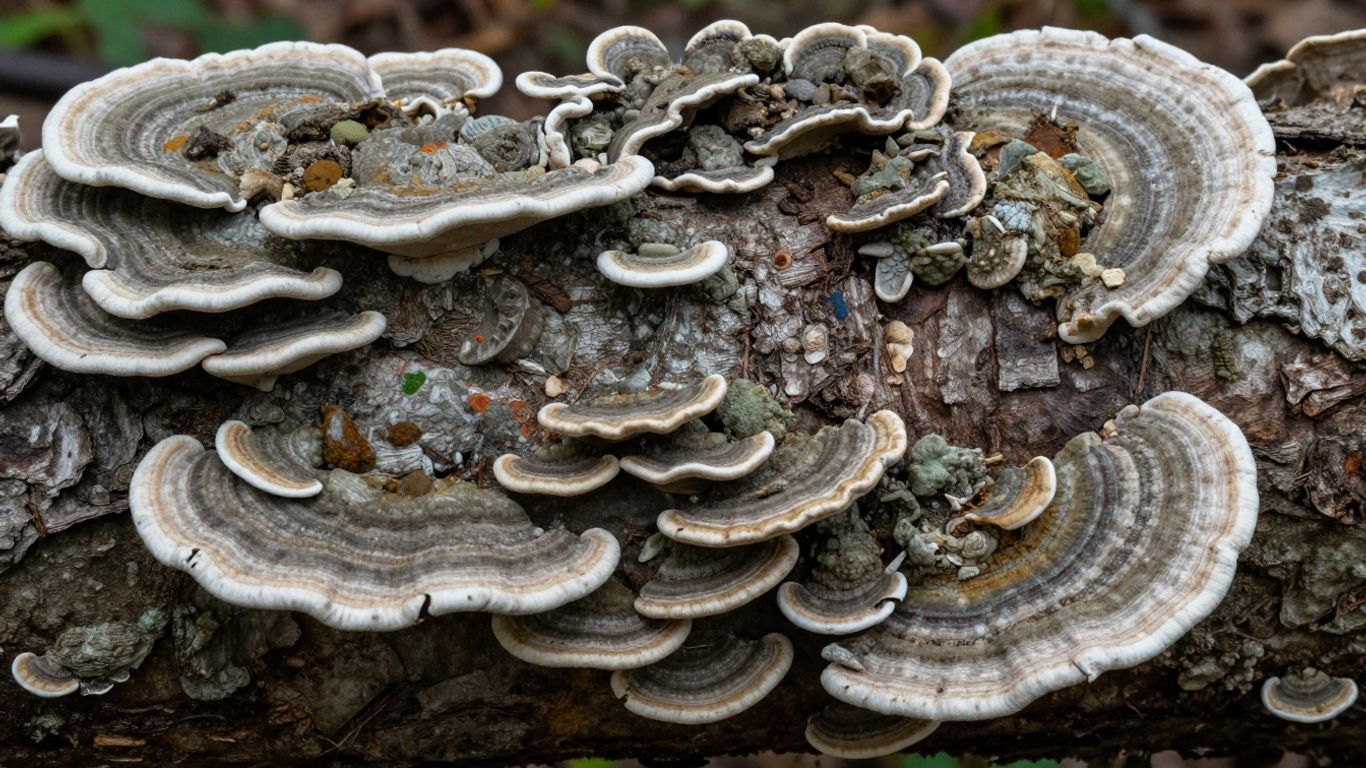
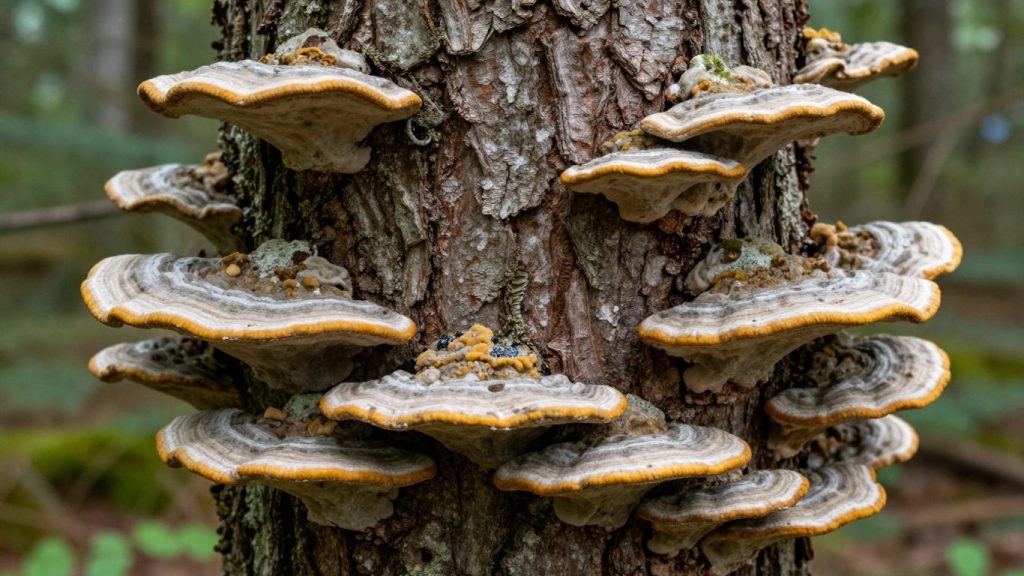
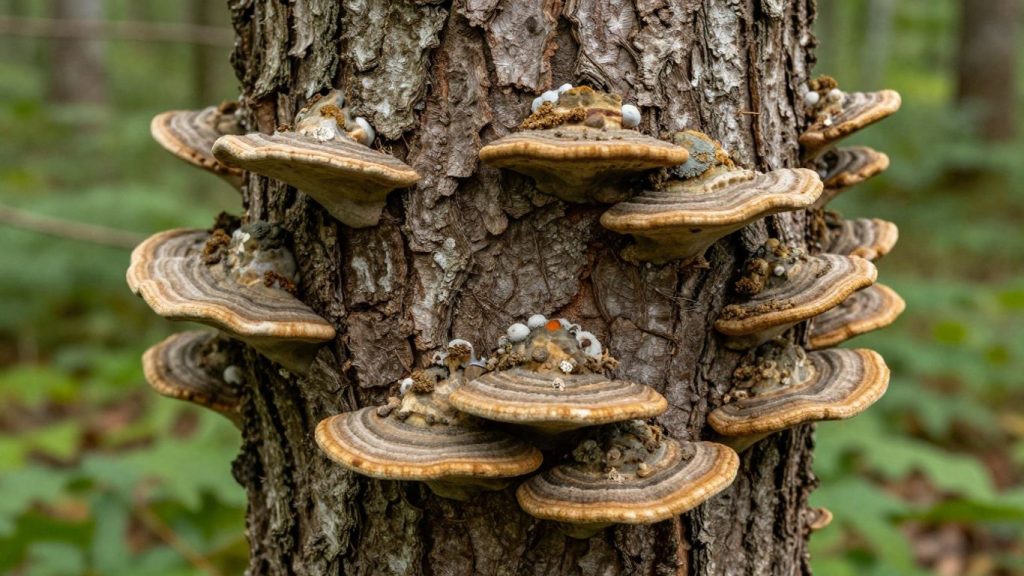
These are probably the most obvious signs of fungal activity. You’ll often see them growing directly out of the bark or on dead wood. They come in all sorts of shapes and sizes, but many look like shelves or brackets sticking out from the tree. Some are tough and leathery, staying put for a long time, while others are softer and might appear seasonally.
- Appearance: Can range from bright orange and yellow (like sulfur fungus) to white, gray, or brown. They often have a fan or shelf-like shape.
- Location: Frequently found on the trunk, branches, or at the base of a tree, especially on older or damaged ones.
- What they mean: These are the reproductive parts of the fungus. Their presence often indicates that the fungus is actively decaying the wood inside the tree.
Powdery Mildew
This one is pretty easy to spot because it looks exactly like its name suggests. It’s a white, powdery coating that appears on the surface of leaves, stems, and sometimes flowers.
- Symptoms: White, dusty patches that can spread and cover large areas of the plant.
- Affected parts: Primarily leaves, but can also appear on young shoots.
- Impact: While it doesn’t usually kill the tree outright, it can weaken it by interfering with photosynthesis and making it more susceptible to other problems.
Rust Fungi
Rust fungi are a bit more subtle than shelf fungi but can cause noticeable damage. They get their name from the rusty, powdery spores they produce.
- Signs: Small spots on leaves that are often yellow, orange, or reddish-brown. You might also see raised pustules or lesions on stems.
- Timing: Often appear during specific times of the year, depending on the tree and the rust species.
- Effect: Can cause leaves to yellow, dry out, and drop prematurely.
Leaf Spot Fungi
These fungi cause distinct spots on the leaves, which can vary a lot in appearance.
- Visuals: Spots can be circular, irregular, or have distinct borders. They might be brown, black, yellow, or even have a halo effect.
- Progression: Over time, spots can merge, causing larger dead areas on the leaf.
- Consequences: Severe leaf spotting can lead to premature leaf drop, weakening the tree.
Root Rot Fungi
These are the sneaky ones because they attack the tree from below ground, making them harder to detect until the damage is significant.
- Common Culprit: Armillaria, often called ‘honey fungus’, is a well-known example.
- Above-ground signs: You might see clusters of mushrooms (often honey-colored) at the base of the tree, especially in the fall. Other signs include yellowing leaves, branch dieback, and a general decline in tree health.
- Underground evidence: Sometimes, white, fan-shaped fungal growth can be found under the bark near the base, or tough, black, root-like structures called rhizomorphs might be present in the soil.
Signs and Symptoms of Fungal Diseases in Trees
Spotting fungal infections on trees isn’t always obvious. Sometimes it’s a subtle change, other times it’s quite dramatic. The sooner you catch these signs, the better your tree’s chances. Here are some common indicators that might point to fungal growth on trees:
Your tree’s leaves can tell you a lot. Keep an eye out for
- Sudden discoloration: Leaves might turn yellow, brown, or develop strange spots or blotches. Sometimes these spots have distinct rings or borders.
- Unusual textures: You might notice a powdery or fuzzy coating on the leaves, almost like someone sprinkled flour on them. This is a classic sign of powdery mildew.
- Distortion or premature drop: Leaves that curl, twist, or fall off much earlier than usual are also red flags. Sometimes leaves might look smaller or misshapen.
Beyond the leaves, look closely at the branches, trunk, and even the base of the tree.
- Fruiting bodies: These are the most obvious signs, often appearing as mushrooms, conks, or shelf-like structures growing on the bark or at the base of the tree. They can vary widely in color and shape.
- Cankers: These look like sunken, dead areas on the bark. They might be cracked, oozing sap, or have tiny black or reddish dots (which are fungal spores).
- Swelling or galls: Abnormal swellings or growths on branches can indicate a fungal infection or insect activity, sometimes both.
Sometimes, the signs are more general, indicating a broader issue with the tree’s overall health. These are definitely signs of unhealthy trees:
- Branch dieback: You might see branches that are wilting, turning brown, or dying, even in the middle of the growing season.
- Stunted growth: If your tree isn’t growing as it normally should, or if new growth seems weak, it could be a sign of an internal problem like root rot.
- General weakness: The tree might just look less vigorous, with fewer leaves or a thinner canopy than in previous years. This can make it more susceptible to other problems, so it’s important to address the underlying cause.
Remember, consistent observation is your best tool. Regularly checking your trees, especially after wet weather or storms, can help you spot problems before they become serious.
When to Seek Professional Help for Tree Fungus
Sometimes, you can handle a fungal issue on your own with some careful pruning and cleanup. But there are definitely times when it’s best to call in the pros. If the problem looks really widespread, like a large portion of the tree is affected, or if you’re seeing signs of serious decay, it’s probably beyond what you can fix yourself. Also, if the tree is large or located in a spot where a falling branch could cause damage, getting an expert opinion is a smart move for safety. Don’t forget that some fungal diseases are super aggressive and can spread quickly, so acting fast with professional guidance is key.
Here are a few situations where you should definitely reach out to a certified arborist:
- The infection covers a significant part of the tree: If you see fungal growth or dieback on more than 25% of the tree’s canopy or trunk, it’s a serious sign.
- You suspect a root rot issue: These are often hard to diagnose and treat without specialized knowledge, and they can be deadly.
- The tree is a hazard: If the fungus is weakening the tree’s structure, making it a risk to people or property, get professional advice immediately.
- You’re unsure about the diagnosis or treatment: When in doubt, it’s always better to consult someone who knows trees inside and out.
Remember, your tree’s health is important, and sometimes that means knowing when to ask for help. A quick call to a local tree care service can save you a lot of worry and potentially save your tree. You can find qualified professionals who can assess your tree’s condition and provide a plan for tree fungus treatment and prevention.
Seeing fungus on your trees can be worrying. If you notice signs like strange spots, powdery mildew, or mushrooms growing on your tree, it might be time to call in the experts. Don’t let tree fungus get the best of your beloved trees; visit our website today to learn more about how we can help!
Wrapping Up: Your Tree’s Health in Your Hands
So, we’ve gone over some of the common tree fungus issues and how to spot them. It might seem like a lot at first, but really, just keeping an eye on your trees is the biggest step. Notice if leaves look weird, if there are odd bumps, or if things are falling off too early. Sometimes, a simple fix like cleaning up fallen leaves or a bit of careful pruning is all that’s needed. But if you see something serious, don’t hesitate to call in a tree expert. They know their stuff and can help figure out the best plan. Taking these steps helps keep your trees looking good and staying strong, which is good for your yard and the whole neighborhood. It’s definitely worth the effort to be a good tree guardian.
Frequently Asked Questions
What makes fungus grow on trees?
Fungus loves damp, shady spots with not much air moving around. It often gets into trees through little cuts in the bark or natural openings. When the weather is wet, the soil isn’t great, or the tree is already weak, fungus can spread more easily.
How can I tell if my tree has a fungus problem?
Keep an eye out for strange spots on the leaves, a white or gray powder, dark patches, mushrooms growing at the base of the tree, bark that looks like it’s peeling, or branches that are starting to die off. Seeing any of these could mean your tree has a fungal issue.
Can tree fungus spread to other trees nearby?
Yes, many types of fungus can travel from one tree to another, especially if they are planted close together. Things like wind, rain, and even insects can carry the fungus spores to new trees.
What are some common signs of fungal infections in trees?
Look for unusual spots or patches on leaves that might be discolored or look water-soaked. You might also see leaves curling, changing shape, or falling off too early. Swollen branches with fuzzy growths or changes in the bark, like sunken spots or oozing, are also signs. Sometimes, you’ll see powdery mildew or even mushrooms.
Is it always obvious when a tree has fungus?
Not always. Sometimes the signs are very small, like a tiny spot on a leaf. Other times, the problem might be hidden under the bark or in the roots, and you won’t see it until the tree is already quite sick. That’s why regular checks are important.
What should I do if I think my tree has fungus?
First, try to identify the problem by looking closely at the trunk, branches, and leaves for anything unusual. If you’re not sure or the problem looks serious, it’s best to call a professional, like a certified arborist. They can help figure out the best way to treat the tree and prevent it from spreading.